How To Work Out If You Have Low Energy

Exercising consistently is not easy, and a lot of people struggle with it. Sometimes, they tell me, it’s because they have low energy.
This is especially common for people who are dealing with depression, which often comes with a lack of energy. It also often comes with sleep issues, which makes that lack of energy even worse.
The good news is that exercise can give you more energy if you do it consistently. It releases energizing and activating neurochemicals that make you feel more awake and alert, and it makes your body systems work more optimally so they’re providing more fuel to your body and brain.
Many studies have found that exercise increases energy and decreases fatigue over multiweek exercise programs.
To learn more about the science of how exercise increases energy and how to exercise to boost your energy levels over time, I wrote a full article about that: How To Exercise For More Energy and Less Fatigue.
The problem is that it’s hard to exercise when you’re fatigued. Not exercising makes it even worse, so you end up in a vicious cycle: too tired to exercise, so you feel even more tired, and then you definitely won’t exercise, and so on.
This article is about how to work out even on a day when you have low energy, so you can start to turn that cycle around.

Before I start, if chronic low energy is an issue, please see your doctor to make sure nothing else is going on and discuss any side effects of medications. Think about your other lifestyle habits like your sleep routine and nutrition, as both have a big impact on your daily energy levels. Also, listen to your body. It’s ok to take a rest day if you’re feeling really worn out. But if you want to improve your health and fitness and get more energy, it’s important to move more days than not.
Start Small And Be Flexible
If you’re feeling drained and you have a long and grueling workout ahead of you, it’s natural to want to skip it.
Instead, break down your exercise goals into small and achievable chunks that you could do even when you feel tired. Shrink a 45-minute walk into a 5 minute one. Aim for a handful of squats at your desk at lunchtime or 5 counter push ups before you leave for work.
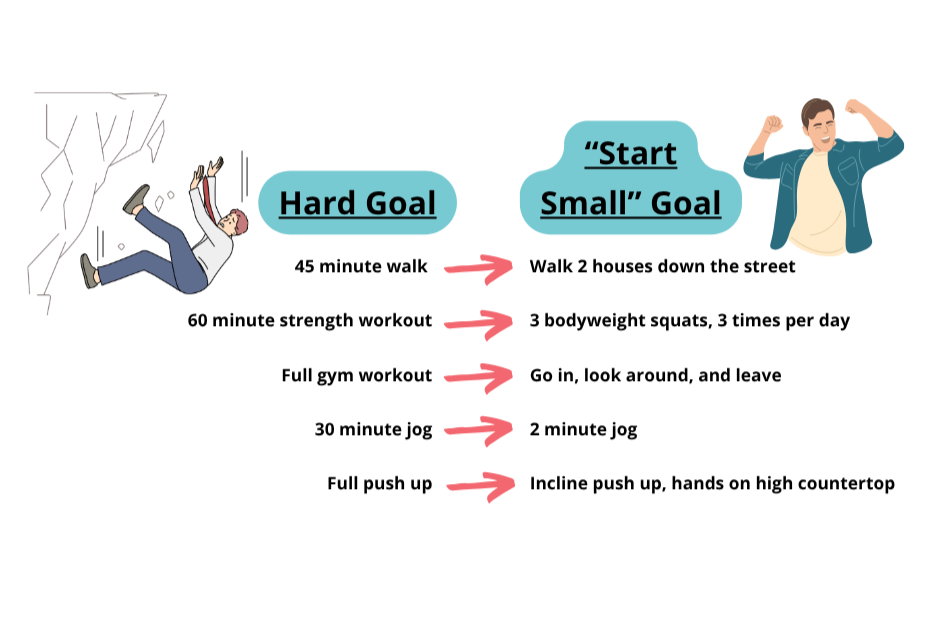
If you find yourself hesitant to break down your goals or be flexible with your routine, some mindset work might be in order. The all or nothing mindset is a very common one that holds people back. I wrote a full article on how to change that mindset: Forget The All Or Nothing Mindset.
Give Yourself Permission To Stop, And Be Kind To Yourself
Once you start moving, it’s easier to keep moving. If you have a longer or more intense workout planned and you don’t feel like you have the energy for it, just get started and give yourself permission to stop after a few minutes.
Tell yourself: “I’ll just put on my sneakers and walk 2 houses down, and if I’m still too tired, I’ll turn around and come back.” Or: “I’ll just do the warmup for my strength training workout and that’s it”.
Once your muscles start working, they (and your brain) will release neurochemicals like epinephrine. Many people find that once those chemicals start doing their work, they feel more energized and can keep going.

The key is to actually give yourself permission to stop. You’re not trying to trick yourself into working out here, you need to trust that you’re going to listen to your body and honor what it’s telling you. If that means that sometimes you do stop at that second house or after the warmup, that’s ok. That’s still better than not doing anything at all.
Also, be kind to yourself. I cannot emphasize this enough. Trying to force yourself to push through low energy does not lead to anywhere good.
Time Your Workouts For When You Have The Most Energy
Energy levels naturally fluctuate, driven by normal changes in hormone levels and also your accumulated physical and mental stress across the day.
Many people have an energy peak about 2-3 hours after they wake up, but everyone’s energy fluctuations are different. You might be a morning person who feels drained after a long day of work, or you might be a night person who feels groggy until noon.
If you already know your highest energy time, great. If you feel low energy all day long, I suggest you keep a log of your energy levels about every half an hour. A simple 1-10 scale, jotted down in a notebook, is fine. You might find that even though your overall energy is low, it does rise a little at certain times of day.
See if you can schedule your biggest or most challenging workout during those times when you feel most energized.
The Bottom Line
It may seem like it’s impossible to work out when your energy is low, but I promise you it’s not.
Plan your workouts to coincide with your highest energy time of day. Start small, be flexible, do the bare minimum and see if your energy starts to rise, and give yourself permission to stop if it doesn’t.
Once you achieve some consistency, you’ll start to feel better. You got this!
If You Need Help
If you found this article helpful and want a simple guide to using exercise to support your mental health, I created a FREE eBook called A Guide to Exercise for Mental Health. It walks you through the science, the mindset shifts, and the practical strategies that make exercise feel supportive instead of overwhelming, including beginner-friendly workout templates.